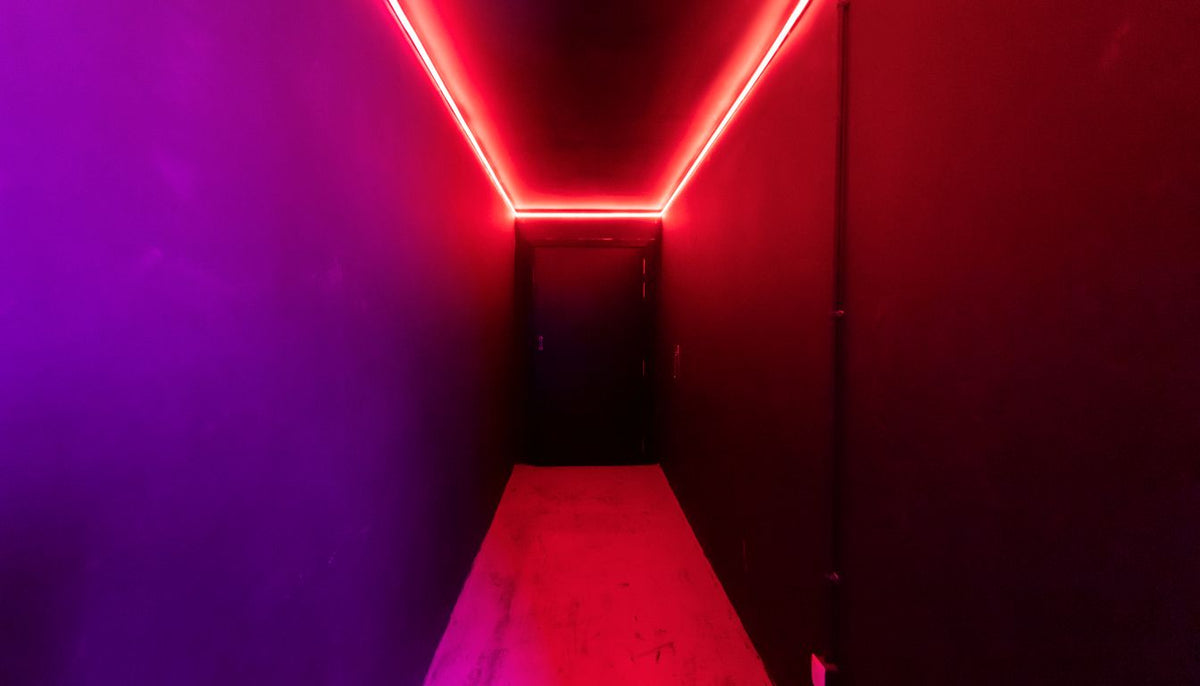
The first chapter of the Three Mothers Trilogy (followed by Inferno and The Mother of Tears), “Suspiria” is a cult film, regarded as one of the most important in the history of Italian and world horror cinema. A visually revolutionary work in which Argento abandons the giallo genre to plunge into pure horror, blending dark fairy tale, occultism and expressionist aesthetics.
Plot
Suspiria tells the story of Suzy Bannon (Jessica Harper), a young American ballerina who moves to Freiburg, Germany, to attend the prestigious Tanz Dance Academy. From the moment she arrives, under pouring rain, Suzy witnesses inexplicable and macabre events: the terrified flight of a student, Pat Hingle (Eva Axén), who is brutally murdered in a climactic, bloody sequence, one of the most celebrated scenes in horror cinema.
Inside the academy, Suzy meets Sara (Stefania Casini) and Olga (Barbara Magnolfi), two students who explain the school's strange rules, run by Madame Blanc (Joan Bennett) and deputy directress Miss Tanner (Alida Valli). Suzy soon discovers that the school hides a terrible secret: it is the lair of a coven of witches, led by the Mater Suspiriorum (the “Mother of Sighs”), one of the Three Mothers of evil.
The film unfolds through dreamlike sequences, grotesque murders and an atmosphere of mounting paranoia, culminating in a climax where Suzy confronts the witch-mother in a visually dazzling duel amid colored lights, labyrinthine sets and an obsessive score.
Directing Techniques and Visual Innovations
“Suspiria” is a technical manifesto in which Argento pushes his aesthetic and sensory research to the extreme. Here are the revolutionary techniques he used.
Cinematography and Technicolor
- 1950s Kodak film stock: Argento bought in China the last remaining rolls of Kodak film used in previous decades, in order to achieve saturated, unnatural colors, drawing inspiration from the palette of Disney's Snow White and the Seven Dwarfs.
- Technicolor process: an anachronistic choice for 1977 (Technicolor was already obsolete), which gave the film a retro, fairy-tale charm, with bloody reds, electric blues and acid greens dominating every frame.
- Colored filters: cinematographer Luciano Tovoli used dyed fabrics to filter the light, creating unique chromatic effects (e.g. the rain scenes with red and blue reflections).
- Mario Bava's input: the master of Italian gothic cinema helped Argento play with light and shadow, creating dreamlike atmospheres and dramatic light cuts (e.g. the opening murder sequence).
Set Design and Architecture
- Production designer Giuseppe Bassan created labyrinthine, kitsch sets, with distorted rooms, asymmetrical doors and objects that seem alive (plants, stained glass, tables), to disorient the viewer and heighten the sense of claustrophobia.
- Location: the dance academy was filmed in a neoclassical building in Munich, Germany, altered to look like a magical, cursed place.
Soundtrack: Goblin
- Collaboration with Goblin: the progressive rock band (Claudio Simonetti, Massimo Morante, Fabio Pignatelli, Agostino Marangolo) composed an experimental score, recorded before filming and played on set to immerse cast and crew in the atmosphere.
- Instruments: a Greek bouzouki (for the hypnotic main theme) and African percussion (for tense scenes).
- Effect: the music is not mere accompaniment but drives the narrative, creating an obsessive rhythm that heightens the fear.
- Daria Nicolodi (Argento's partner and co-screenwriter) contributed research on the occult and classic fairy tales (Alice in Wonderland, Snow White, Bluebeard), shaping the film's fairy-tale, symbolic framework.
Directorial Style
- Extreme close-ups on details (eyes, hands, objects) to build tension.
- Overhead shots: symbolizing the witches' point of view, watching mortals from above.
- Frenetic editing: over 1,200 individual shots, each with a unique composition.
- Sound effects: thunder, wind, moans and dripping water amplified to create an oppressive atmosphere.

Lighting Techniques
“Suspiria” is not just a film: it is an experience of color and light, in which light does not illuminate, but creates emotions, distorts reality and guides the viewer through a visual nightmare. Here is how Argento and cinematographer Luciano Tovoli revolutionized lighting in cinema.
The Technical Process: Technicolor and Very Low-Sensitivity Kodak Film Stock
“Suspiria” is one of the last films in the world to be shot and developed in Technicolor Process 5 (a three-strip process), a technique already out of use in the 1970s because of its high costs and the complexity of development. Carlo Labella and his team at Technicolor Rome played a fundamental role in the film's final look.
“Without Technicolor and Kodak, it would not have been possible to have Suspiria.”
Luciano Tovoli, Senses of Cinema
Tovoli drew inspiration from The Wizard of Oz (1939), using an imbibition process similar to that of Fleming's classic to achieve saturated, deep, almost painterly colors. Argento and Tovoli also chose a very low-sensitivity Kodak Eastman 5254 film stock (30-40 ASA), which required an enormous amount of light to be exposed: the advantage was an unmatched depth of field and extremely saturated colors, while the drawback was the need to use extremely powerful lights, such as arc lights, which generated a great deal of heat on set.
Arc Lights and Colored Fabrics (Instead of Gels)
- Arc lights: Tovoli used arc lights, far more powerful than ordinary tungsten lamps, to create a hard, directional light, perfect for sculpting faces and highlighting details such as sweat, tears and blood. However, they generated excessive heat, up to 50°C on set, forcing the actors to perform in extreme conditions.
- Colored fabrics in place of gels: instead of the classic colored plastic filters, Tovoli brought dyed silk or cotton fabrics close to the actors' faces, so that the colors were not merely projected, but almost “thrown” onto the characters, creating a hyper-saturated, unreal effect, as in the scene of Suzy's arrival in the rain, where the red and blue lights filtered through the fabrics color the rain and the faces in a surreal way.
The Color Palette: Colors as Protagonists
In “Suspiria”, every color has a symbolic meaning and helps create a dreamlike atmosphere.
| Color | Symbolism | Examples in the film | Psychological effect |
|---|---|---|---|
| Red | Blood, violence, evil | The academy's walls, curtains, the victims' blood, lights in the opening sequence | Claustrophobia, danger, tension |
| Blue | Mystery, coldness, death | Rain, the witches' shadow, night lights | Anguish, isolation, emotional coldness |
| Green | Nature, decadence, poison | Plants, glass, the academy's sets | Decay, illness, magic |
| White | Innocence, purity | Suzy's clothes, the bedroom walls | Contrast with evil |
| Black | Darkness, the unknown | Corridors, shadows, night scenes | Fear of the unknown |
How Colors Drive the Narrative
- Dominant red: in the murder scenes (e.g. the death of Pat Hingle), red floods the screen, symbolizing violence and chaos.
- Blue and green: in the scenes of psychological tension (e.g. Suzy exploring the academy), the cold colors isolate the protagonist and amplify her loneliness.
- Extreme contrasts: Argento uses colored lights in an unnatural way (e.g. a face lit in red while the background is blue), to create disorientation.
According to CineLapsus's critique, the reds, greens and blues of Suspiria do not seek realism, but convey pure emotions, in their raw state.
The Influence of Mario Bava and Expressionist Cinema
Mario Bava, the master of Italian gothic cinema, advised Tovoli on how to use light to create distressing atmospheres. Techniques were borrowed from him such as side lighting to sculpt faces (with deep shadows under the characters' eyes), strong contrasts between light and dark (chiaroscuro) and the use of colored filters to alter the perception of reality, as in the scene of the screaming blind man in the empty square, a direct homage to Bava. Tovoli himself compared Argento's style to that of an architect or painter, capable like Bava of building chromatic magic out of often simple plots.
Argento and Tovoli also drew inspiration from German Expressionist cinema (such as Murnau's Nosferatu, 1922): distorted sets with crooked rooms and asymmetrical doors, lights that create elongated, grotesque shadows, and a use of color designed to represent emotions more than reality.
Framing Techniques and Depth of Field
Tovoli used anamorphic lenses to amplify the distortion of spaces: the academy's rooms seem infinite, the corridors stretch out beyond measure and the doors appear taller and more menacing, as in the sequence in which Suzy runs through the corridors as if in an endless labyrinth. Thanks to the very low-sensitivity film stock, Tovoli also managed to keep everything in focus, from the close-ups to the backgrounds, even with very intense lights, obtaining shots rich in detail even in the long sequence shots.
- Extreme close-ups on eyes, mouths and objects (e.g. the knife, the killer's gloves).
- Overhead shots to simulate the witches' point of view (e.g. Suzy seen from above as she climbs the stairs).
- Extreme long shots, filmed without cuts to increase the tension (e.g. the opening sequence with Pat Hingle).
Lighting as a Narrative Tool
- Day vs night scenes: by day a cold, pale blue light dominates, symbolizing apparent normality; by night a red and orange light prevails, symbolizing the evil that awakens.
- Color transitions: when Suzy discovers the truth, the lights shift from white to blood red.
- Practical effects: smoke, fog and mirrors were used to diffuse the light and create supernatural effects.
Lighting Anecdotes
- Inspiration from Snow White and the Seven Dwarfs (1937): Argento forced Tovoli to rewatch the Disney film to study its color palette, with the aim of creating a fairy-tale yet unsettling world, like a dark fairy tale.
- The set as a “living painting”: Tovoli treated every shot like a painting, with side lighting to sculpt faces (as in a portrait by Caravaggio) and pure colors, without realistic shading.
- Technical problems: the arc lights were so powerful that they burned the cables on set, and the Kodak 5254 film stock was hard to find (it was bought in China, one of the last available batches).
- Collaboration with Goblin: the score was recorded before filming and played on set to synchronize lights and music; in the murder scenes, the pulsing red lights were synchronized with the rhythm of the music.
“In Suspiria, light is not functional: it is pure poetry.”
Luciano Tovoli, Auralcrave
The 5 Key Points of the Lighting
- Technicolor + Kodak 5254 film stock: hyper-saturated colors and a unique depth of field.
- Arc lights + colored fabrics: chromatic effects almost “thrown” onto the faces.
- Symbolic color palette: red for evil, blue for mystery, green for magic.
- Influence of Bava and Expressionism: dramatic lighting and distorted sets.
- Light as a narrative tool: it does not merely illuminate, but moves the viewer and tells the story.
The Night Scenes: An In-Depth Analysis
In “Suspiria”, the night scenes are not simply set at night: they are a sensory experience, in which light, color and shadow merge to carry the viewer into a visual nightmare. Argento and Tovoli used innovative techniques to turn the night into a character in its own right.
Suzy's Arrival Scene: Rain, Red and Blue Lights
Suzy Bannon arrives in Freiburg on a night of pouring rain: the sequence opens the film and immediately sets the tone, between mystery, tension and a sense of imminent danger.
- Arc lights with colored filters (red and blue), obtained with fabrics instead of the classic gels, to project saturated colors onto the rain and the faces: the rain is not gray, but colored red and blue, in a surreal and menacing atmosphere already evident when Suzy leaves the airport.
- Contrast between light and dark: the taxi's lights (yellow and white) cut through the darkness, while the academy's red and blue lights only partially illuminate the facade, leaving the rest shrouded in shadow, in a play of chiaroscuro that hides more than it reveals.
- Extreme depth of field: thanks to the Kodak 5254 film stock, Tovoli keeps in focus both the close-up of Suzy in the taxi and the background of the illuminated academy, making the viewer feel the distance between Suzy and the cursed place.
- Reflections on the rain: the colored lights (red from the car lights, blue from the signs) are reflected in the puddles in an almost psychedelic effect, the symbol of a rain that washes away normality and introduces Suzy into a world dominated by the supernatural.
The Double Murder: Red and Green Lights in a Night of Terror
The first victim, Pat Hingle, flees the academy in terror and is brutally murdered in a deserted square in the rain; the scene is shot with artificial night lighting.
- Arc lights with red filters: the square (Munich's Konigsplatz) was lit with red-filtered arc lights to create a nightmarish atmosphere, in which the blood appears even more vivid and the shadows stretch out grotesquely.
- Towers and mobile lights: to light the vastness of the square, Tovoli used towers with directional lights that followed the movement of the camera; according to Wikipedia, the scene required about a week of shooting precisely because of the difficulty of properly lighting such a vast space.
- Extreme contrasts: red lights (blood, violence) against blue lights (cold, death): Pat's body is lit in red, while the background remains shrouded in a dark blue.
- Practical effects: smoke and fog were used to diffuse the light and create a dreamlike effect, making the scene almost unreal, like a nightmare.
The Night Scenes Inside the Academy: Endless Corridors
Much of the film takes place inside the academy, at night, when the witches are active: the interior night scenes are among the most iconic in the film.
- Colored lights on walls and corridors: red, blue and green, obtained with colored filters on arc lights, they make the corridors seem endless and change meaning according to the mood of the scene: red for danger and violence, blue for mystery and isolation, green for magic and decadence (as in the room of the Mater Suspiriorum).
- Side lighting and backlighting: to sculpt faces (e.g. Suzy lit from the side, with half her face in shadow) and to create luminous halos that separate the characters from the background, making them seem suspended in an unreal world.
- Mirrors and reflective surfaces: used to multiply the light sources and create distorting reflections, as in the scene in which Suzy sees her own deformed reflection in a mirror.
- “Impossible” lighting: in some scenes the lights seem to come from invisible sources, with the scene flooded with a saturated color even though there are no lit lamps in view.
- Pulsing light: in some sequences, such as the final climax, the red lights pulse to the rhythm of Goblin's score, creating a perfect synchronization between image and sound.
The Swimming Pool Scene: Nocturnal Blue and Green
Sara (Stefania Casini) discovers something horrible in the academy's swimming pool, in a night scene with cold, menacing lighting.
- Underwater blue and green lights, to create an effect of depth and mystery: the water looks black and impenetrable, while the colored reflections suggest a sense of danger.
- Contrast between light and shadow: Sara is lit by a white light, a symbol of innocence, while the water and the walls remain shrouded in blue and green, symbols of death and magic, in a contrast that foreshadows her end.
- Artificial fog, added to diffuse the light and create an effect of unreality.
The Final Climax: Red and Gold Lights (the Mater Suspiriorum)
In the last sequence, in which Suzy confronts the Mater Suspiriorum, the setting is lit in a surreal way: the room is flooded with red light, a symbol of blood and evil, with golden reflections that evoke the witch's supernatural power. According to Book and Negative's analysis, in the last twelve minutes of the film black and gold provide the frame, but it is red that remains the dominant color.
- Lights that seem to “explode”, thanks to filters and overexposure, as if the witch were manifesting her power.
- Supernatural light effects: colored smoke and mobile lights were used to simulate magic, making the scene resemble a painting in motion, with colors that change dynamically.
General Techniques for the Night Scenes
- Artificial vs natural lighting: no night scene was shot during the day; Argento and Tovoli preferred to shoot at night, or in the studio with controlled lighting, to maintain the realism of the shadows (with the exception of some exterior scenes, such as the rain on arrival, shot in the studio with artificial rain and simulated night lighting).
- Towers and cranes for the lights: used in the exterior night scenes, such as the one in the square, to light large areas without loss of intensity.
- Colored filters on anamorphic lenses: to distort reality and amplify the colors, giving the shots an almost painted look, with soft edges and intense colors.
- Synchronization with the music: the pulsing lights, as in the climax, were synchronized with Goblin's score, for a more immersive experience.
Symbolism of the Night Lights
| Color | Symbolism | Examples in the night scenes |
|---|---|---|
| Red | Violence, blood, evil | Murder scenes, final climax |
| Blue | Mystery, cold, death | Rain, corridors, swimming pool |
| Green | Magic, decadence, poison | Room of the Mater Suspiriorum, sets |
| White | Innocence, purity | Suzy at the beginning, before she discovers the truth |
| Black | Darkness, the unknown | Corridors, the witches' shadow |
| Gold | Supernatural power | Final climax (Mater Suspiriorum) |
Anecdotes and Trivia about the Night Scenes
- The rain was artificial: the scenes in the rain, such as Suzy's arrival, were shot in the studio with artificial rain systems and controlled night lighting.
- The Konigsplatz was lit for a week: the double murder scene in the square required 7 days of shooting, with towers and arc lights to light the setting.
- The red lights were so intense that they burned the electrical cables on set.
- Argento and Tovoli studied Snow White and the Seven Dwarfs (1937) again to replicate the saturated colors of the original Technicolor.
- No two shots alike: Argento demanded that every shot be different from the others, forcing Tovoli to experiment constantly with lights and colors.
Why the Night Scenes of “Suspiria” Are Legendary
The night scenes of “Suspiria” are not simply set at night: they are a work of visual art, in which light, color and shadow merge to create a unique experience.
- Advanced artificial lighting (arc lights, towers, colored filters).
- Revolutionary use of Technicolor (saturated colors, depth of field).
- Consistent color symbolism (red = violence, blue = mystery, green = magic).
- Carefully crafted practical effects (artificial rain, fog, smoke).
- Synchronization with the music (lights pulsing to the rhythm of Goblin).
- Declared inspiration from Bava, Disney and German Expressionism.
“The night is a world dominated by color and terror.”
Review from Davinotti (paraphrase)

Technical Data and Reception
- Director
- Dario Argento
- Screenplay
- Dario Argento, Daria Nicolodi (inspired by Thomas de Quincey's Suspiria de Profundis and by Nicolodi's grandmother's stories)
- Cinematography
- Luciano Tovoli (with input from Mario Bava)
- Editing
- Franco Fraticelli
- Production design
- Giuseppe Bassan
- Costumes
- Pier Luigi Pizzi
- Music
- Goblin (Claudio Simonetti, Massimo Morante, Fabio Pignatelli, Agostino Marangolo)
- Production
- Claudio Argento, Salvatore Argento
- Distribution
- International Classical Films
- Country
- Italy, West Germany
- Language
- Italian (dual version: Italian and English)
- Genre
- Horror, supernatural giallo
- Runtime
- 97 minutes (1h 37m)
- Format
- Technicolor, 2.35:1 (CinemaScope)
- Italian release
- February 1, 1977
- Worldwide release
- 1977 (varies by country)
Critical Reception
- Italy – Divided critics: some found it too avant-garde (Tullio Kezich panned it in Il nuovissimo mille film), while others hailed it as a visual masterpiece.
- Italy – Audience: it was not initially a commercial success in Italy (grossing 1.43 billion lire at the time, roughly €7.4 million today), but became a cult classic over time, ranking 11th among the most-watched films of the 1976-77 season in Italy.
- Abroad: an enormous success in France, Germany, Japan, the US and the UK, establishing Argento's international reputation, with unanimous praise for the cinematography, score and unique atmosphere. Today it is regarded as one of the 100 greatest films in cinema history (according to FilmTV.it).
Box Office
| Country | 1977 Gross | 2026 Equivalent |
|---|---|---|
| Italy | 1,430,000,000 lire | ~€7.4 million |
| Worldwide | Not available (but a success in Europe, the US and Japan) | Estimated over $20 million (about €18 million) |
Note: although it did not surpass Deep Red (1975) in Italy, “Suspiria” became Argento's most profitable film abroad, especially in France and Germany.
Cast and Leading Roles
| Role | Actor/Actress | Notes |
|---|---|---|
| Suzy Bannon | Jessica Harper | Chosen by Argento after seeing her in Brian De Palma's Phantom of the Paradise (1974). Her doll-like face (almond eyes, manga-like) was decisive. |
| Sara | Stefania Casini | Suzy's friend, victim of one of the film's most shocking scenes (barbed wire). |
| Miss Tanner | Alida Valli | The academy's deputy directress, an authoritarian and mysterious figure. |
| Madame Blanc | Joan Bennett | The school's directress, cast partly for her ten-year relationship with Fritz Lang. |
| Daniel | Flavio Bucci | A music student, an ally of Suzy. |
| Mark | Miguel Bosé | The first major role for the Spanish singer, who performs in English. |
| Olga | Barbara Magnolfi | A student at the academy, victim of a brutal murder. |
| Pat Hingle | Eva Axén | The first victim, in the film's iconic opening scene. |
| Prof. Milius | Udo Kier | A veteran character actor of German cinema, here in a minor role. |
| Mater Suspiriorum | Helena Makowska | The witch-mother, seen only in the final climax. |
Trivia and Behind the Scenes
Production and Artistic Choices
- Literary inspiration: the title Suspiria comes from Thomas de Quincey's Suspiria de Profundis (1845), an essay on opium and hallucinations. The screenplay was also written by Daria Nicolodi, who added autobiographical elements (stories told by her pianist grandmother, Yvonne Loeb).
- Jessica Harper was cast for her youthful, innocent look (she was 27 at the time but looked 16).
- Joan Bennett (76 at the time) was cast partly because of her past relationship with Fritz Lang, one of Argento's favorite directors.
- Miguel Bosé (then unknown as an actor) was cast to attract the Spanish audience.
Special Effects and Tricks
- Fake blood: for the murder scenes, Argento used pig's blood (thicker and more realistic).
- The barbed-wire scene: Sara's (Stefania Casini) death was filmed using a mannequin, but the actress had to perform with her face pressed against glass to achieve the suffocation effect.
- Colored lighting: the anamorphic lenses were covered with colored filters to achieve psychedelic effects.
Production Issues
- Censorship: Argento originally wanted underage actresses to play the students, but German law prohibited it.
- Limited budget: the film cost about 1 billion lire (€5.2 million today), but its foreign grosses made it highly profitable.
Connection to the Three Mothers Trilogy
“Suspiria” is the first chapter of the trilogy, followed by Inferno (1980), dedicated to Mater Tenebrarum (the Mother of Darkness), and The Mother of Tears (2007), dedicated to Mater Lachrymarum (the Mother of Tears). The three films are linked symbolically, but not narratively.
Soundtrack and Pop Culture
Goblin's main theme (with its bouzouki) has become iconic, used in films, TV series and video games (e.g. Stranger Things). Dario Argento actively collaborated on the composition, directing the musicians in the studio.
Recognition and Legacy
- An instant cult classic among horror fans, though underrated by Italian critics on release.
- Influenced directors such as John Carpenter (Halloween), David Lynch (Twin Peaks) and Guillermo del Toro.
- 2018 remake: Luca Guadagnino directed a reboot starring Dakota Johnson and Tilda Swinton, paying homage to Argento's visual style.
On-Set Anecdotes
- Argento shot the murder scenes early in the morning, to capture the most dramatic natural light.
- Jessica Harper had to learn to dance for the role, even though the film contains no classical dance scenes.
- The final scene (with the Mater Suspiriorum) was shot in a single night, using practical effects (smoke, colored lights, mirrors).
Conclusion: Why Is “Suspiria” a Masterpiece?
“Suspiria” is not just a horror film, but a unique sensory experience in which image, sound and narrative merge to create a visual nightmare. Argento sacrifices a linear plot (the film has deliberate narrative gaps) to focus on atmosphere, making it a work closer to art than to traditional cinema.
Strengths
- ✓ Revolutionary cinematography (Technicolor, colored filters).
- ✓ An unforgettable score (Goblin).
- ✓ Dreamlike set design (Giuseppe Bassan).
- ✓ A unique atmosphere (a blend of fairy tale, horror and surrealism).
- ✓ Cultural influence (it has inspired generations of filmmakers).
Weaknesses (according to some critics)
- ✗ A confusing plot (unresolved mysteries, such as Suzy's final smile).
- ✗ Uneven acting (some performers don't match the direction's quality).
- ✗ A slow pace (for viewers seeking action rather than mood).
“Suspiria sacrifices a linear plot to focus on atmosphere, becoming a work closer to art than to traditional cinema.”
Sources and Further Reading
- Wikipedia – Suspiria (technical data, cast, box office, Konigsplatz)
- MYmovies.it (plot, reviews)
- Davinotti (technical analysis, Technicolor)
- Spietati.it (trivia, soundtrack)
- Cinema Fandom Wiki (box office, reception)
- Il Collezionista di Cinema (visual style, influences)
- Senses of Cinema: Luciano Tovoli and Suspiria (Technicolor, Kodak)
- Auralcrave: The Cinematography of Suspiria (arc lights, colored fabrics)
- CineLapsus: Visual analysis (colors and symbolism)
- Spazio70: The visionary turning point (lighting and set design)
- FilmScoop (visual analysis, red and blue lights)
- Everyeye Cinema (impossible lighting, symbolism)
- Book and Negative (technical review, night colors)
Turn off all the lights and plunge into terror... the killer is waiting for you... he's hiding somewhere... even if you can't see him....
Photo credits
- Cover: photo by Aleksandar Pasaric, via Pexels
- Image 1: photo by Deepain Jindal, via Pexels
- Image 2: photo by Michele Petruzzelli, via Pexels