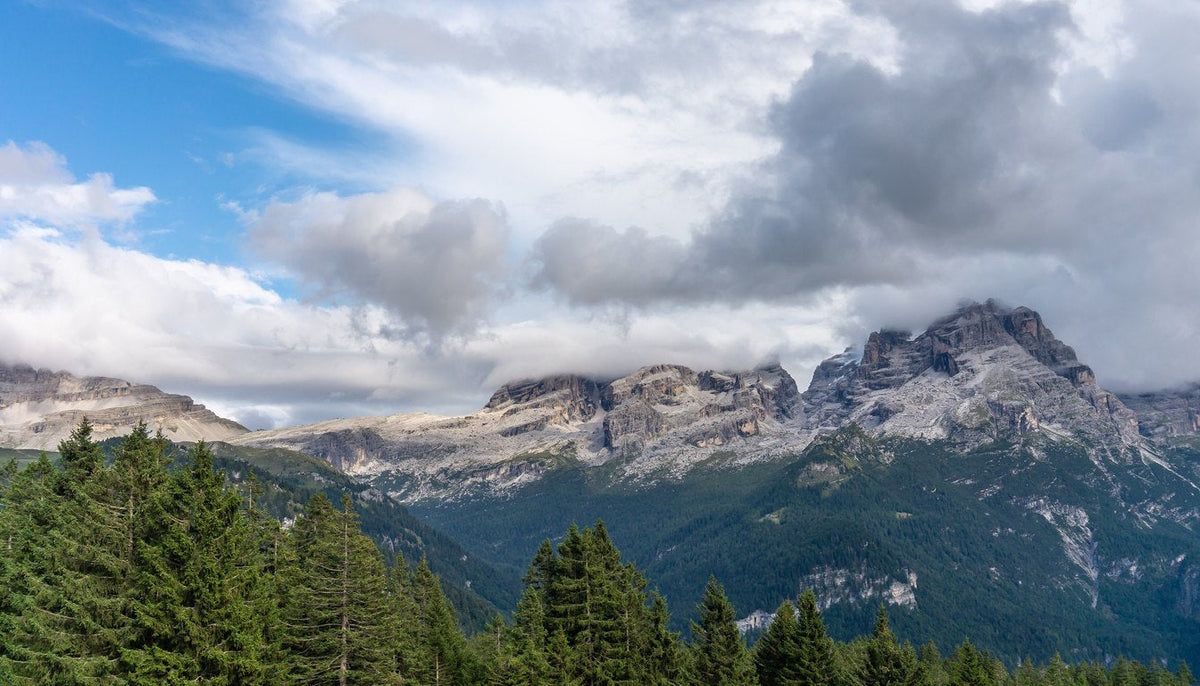
Madonna di Campiglio, known as the “Pearl of the Dolomites”, is one of Italy's most celebrated tourist destinations, set in the heart of Trentino between the Brenta Dolomites and the Adamello and Presanella Alps. Its origins reach back to the Middle Ages: the earliest written records date to 1190, when Raimondo, atoning for his sins, founded a monastery-hospice dedicated to assisting travellers crossing the alpine passes. This refuge, run first by religious orders and later by the Chapter of Trento Cathedral, was a vital stopping point for pilgrims, merchants and travellers moving between the valleys of Trentino and the alpine crossings.
History and origins of the village
The name “Madonna di Campiglio” comes from a 1222 document by the monk Oprando, who referred to the Hospital of the “most glorious Mother of God, Mary of Ambino”. The second part of the name, “Campiglio”, derives from a dialect term meaning a “small field” or plain, referring to the flat shape of the plateau on which the village stands — visible when climbing up from Val Rendena or Val di Sole.
Madonna di Campiglio is not an independent municipality, but a hamlet shared between the municipalities of Pinzolo and Tre Ville, in the Province of Trento. Despite this, its international fame has made it a symbol of luxury tourism and excellence, especially for skiing and its breathtaking landscapes.
Statistical overview
| Data | Value |
|---|---|
| Population | 822 residents (ISTAT data) |
| Altitude | 1,553 m a.s.l. (village centre) |
| Location | Between the Brenta Dolomites and the Adamello-Presanella Alps |
| Reference municipalities | Pinzolo and Tre Ville (formerly Darè, Vigo Rendena and Villa Rendena) |
| Accessibility | Reached via the SS 239 state road of Campiglio |
| Climate | Alpine, with cold snowy winters and cool sunny summers |
| Protected area | Adamello-Brenta Nature Park (620.51 km²) |

Flora: an alpine garden of biodiversity
Madonna di Campiglio lies within the Adamello-Brenta Nature Park, the largest protected area in Trentino (620.51 km²), recognised as a UNESCO Global Geopark since 2008. The region's flora is exceptionally rich, with over 1,300-1,500 plant species, many of them endemic or rare.
Notable plant species
- Edelweiss (Leontopodium nivale): the emblematic flower of the Alps, growing among rocks and high-altitude pastures.
- Wild orchids (locally called “Madonna's slippers”): among the most beautiful and rare, found in damp meadows and woodland.
- Betony-leaved rampion (Phyteuma betonicifolium): a herbaceous plant with bell-shaped flowers typical of alpine areas.
- Martagon lily (Lilium martagon): a bulbous plant with pink-violet flowers, protected and highly prized for its beauty.
- Swiss stone pine (Pinus cembra): a tree symbolic of the Dolomites, resistant to cold and harsh weather.
- Norway spruce (Picea abies) and beech (Fagus sylvatica): dominant species in the surrounding valley forests.
- Alpenrose (Rhododendron ferrugineum): shrubs that colour the mountainsides pink in spring.
The park's biodiversity is favoured by the geological complexity of the territory, which combines dolomitic environments (the Brenta Group) with granite ones (Adamello-Presanella), creating a mosaic of unique habitats.
Fauna: a wild and fascinating world
The Adamello-Brenta Nature Park is home to an extraordinarily rich fauna, with over 100 wildlife species, some of them rare and protected.
Mammals
- Brown bear (Ursus arctos): the park's symbol, reintroduced through the Life Ursus project after centuries of persecution — one of Europe's most successful conservation stories.
- Alpine chamois (Rupicapra rupicapra): agile and elegant, living on high-altitude grasslands and rocky slopes.
- Red deer (Cervus elaphus) and roe deer (Capreolus capreolus): widespread in woodland and pastures.
- Alpine ibex (Capra ibex): reintroduced in partnership with the Lombardy Alps Park, now populating the highest rocky areas.
- Mouflon (Ovis aries musimon): a sturdy ungulate originally from Sardinia and Corsica, now also present in the Alps.
- Marmot (Marmota marmota): lives in colonies among the rocks and alpine pastures.
- Fox, badger, pine marten, beech marten, stoat: mustelids found throughout the woodlands and rocky areas.
Birds
- Golden eagle (Aquila chrysaetos): the most majestic raptor of the Alps.
- Western capercaillie and black grouse: gamebirds living in the conifer forests.
- Rock ptarmigan (Lagopus muta): adapted to high-altitude life, its plumage changes colour with the seasons.
- Eagle owl, little owl, scops owl: nocturnal raptors that animate alpine nights.
Fish and reptiles
- Arctic char (Salvelinus alpinus): a fish typical of alpine lakes, prized in local cuisine.
- Brown trout (Salmo trutta): found in the park's waterways.
- Vipers and lizards: reptiles found in the rocky, sun-exposed areas.
Culinary traditions and local dishes
The cuisine of Madonna di Campiglio and Trentino at large blends alpine and Central European traditions, enriched by local ingredients such as speck, cheese, mushrooms, polenta and apples. The dishes are hearty and flavourful, designed to fuel mountain dwellers and skiers alike.
Canederli (Knödel)
Large dumplings made from stale bread, milk, eggs and cheese (Trentino Grana or Puzzone di Moena DOP), flavoured with speck or alpine herbs. Served in broth or with melted butter and grated cheese.
Strangolapreti
Green dumplings made from stale bread, wild spinach, eggs and butter, dressed with melted butter, sage and cheese, or with speck and chanterelle mushrooms.
Polenta with Puzzone di Moena DOP
Polenta, made from buckwheat or maize flour, paired with Puzzone di Moena, a washed-rind cheese with an intense aroma but a sweet, buttery heart; often served with sautéed mushrooms or game stew.
Speck Alto Adige IGP
Smoked cured ham, aged for months and flavoured with juniper, bay leaf and pepper.
Smacafam
A Carnival dish made from flour, butter, eggs, milk and fresh Trentino sausage, baked into a hearty savoury frittata.
Tortel di patate
Fritters made from grated potatoes, eggs and flour, served as a side dish or with local cured meats and cheeses.
Sauerkraut
Fermented cabbage, a traditional side dish served with sausage, speck or smoked meat.
Preora-style pickled char
Lake fish marinated in vinegar, onions, carrots and spices, served cold as a starter.
Rabbit leg with polenta
Rabbit braised in red wine with aromatic herbs, served with polenta.
Typical desserts
- Apple strudel: apples, raisins, cinnamon and pine nuts wrapped in thin pastry, served warm with cream or ice cream.
- Zelten: Trentino fruit bread with nuts, apples, pears, figs and spices, traditionally made at Christmas.
- Sweet fritters: made from apples or potatoes, served with honey or icing sugar.
Typical drinks
- Trentino wines: Lagrein, Teroldego, Müller Thurgau, Chardonnay.
- Trentino grappa: a pomace brandy served as a digestif.
- Trentino-style coffee: spiked with grappa or rum, ideal after a day on the slopes.
Winter tourism: a skiing paradise
Madonna di Campiglio is one of the world's capitals of alpine skiing, thanks to the Campiglio Dolomiti di Brenta Val di Sole ski area.
Ski area — technical data
| Feature | Detail |
|---|---|
| Extent | 156 km of slopes, among the most extensive in Trentino |
| Lifts | 60 lifts (chairlifts, cable cars, ski tows) |
| Altitude | From 850 m to 2,500 m (Cima Grostè) |
| Slopes | 106 slopes: 30 red, 20 black, 46 blue, 10 green |
| Snowparks | 4 snowparks for freeride and snowboarding |
| Linked resorts | Madonna di Campiglio, Folgarida, Marilleva, Pinzolo, Campo Carlo Magno |
The most famous slopes
- Canalone Miramonti (3-Tre): the legendary slope hosting the World Cup slalom, established in 1949 and held every 22 December. Winners include Alberto Tomba, Giorgio Rocca and Gustav Thöni.
- Spinale Direttissima: one of Italy's steepest and most technical black runs, with a section named “Schumacher Streif” in honour of Michael Schumacher.
- Tulot Audi Slope: a red run prized for its variety and stunning views.
- DoloMitica: a long, scenic run ideal for intermediate skiers.
- Little Grizzly and Amazzonia: runs for children and beginners, perfect for families.
Winter services and activities
- Alpine skiing and snowboarding on slopes for every level.
- Cross-country skiing in Val Rendena and the surrounding area.
- Freeride and off-piste skiing in dedicated zones.
- Ski mountaineering on the peaks of the Brenta Group and the Adamello.
- Sledding, ice skating and snowmobile excursions.
Ski passes and rates
| Type | Indicative price |
|---|---|
| Daily ski pass | € 60-70 depending on the season |
| Weekly ski pass | € 300-350 |
| Children's ski pass | Discounts for under-8s and under-14s |
| Evening ski pass | € 25-30 |
Summer tourism: trekking, mountain biking and adventure
Madonna di Campiglio is not just a winter destination: in summer it becomes a paradise for nature lovers and outdoor sports enthusiasts. The Adamello-Brenta Nature Park offers over 700 km of marked trails, suitable for every level.
The finest trekking routes
| Route | Difficulty / duration | Highlights |
|---|---|---|
| Brenta Dolomites High Route (Alta Via) | Expert · 5-7 days | Cima Grostè, Cima Tosa, Cima Brenta, Tuckett Refuge |
| Grostè Trail | Medium · 4-5 hrs return | Summit at 2,899 m, 360° panorama |
| Malghe (Alpine Huts) Trail | Easy-medium · 3-4 hrs | Tasting of local produce at altitude |
| Lake Tovel Trail | Easy · 2-3 hrs | Crystal-clear waters reflecting the Dolomites |
| Varena Waterfalls Trail | Easy · 1 hr | A 175 m waterfall, among the tallest in Trentino |
| Bocchette Via Ferrata | Expert | Vertical sections; harness, helmet and via ferrata kit required |
Mountain biking and e-biking
- Downhill and freeride: equipped runs with jumps and obstacles, lifts that also carry bikes.
- Campo Carlo Magno Pass Trail: ~20 km to Pinzolo, with views over the Brenta Dolomites.
- Malghe e-bike Trail: ~30 km round trip up to the high-altitude alpine huts.
- Lake Garda Trail: ~100 km, a long route for experienced riders (2-3 days).
Services for bikers: bike rental, bike shuttles, bike-friendly hotels with wash stations and workshops, and the Dolomeet Card offering discounts on rentals, lifts and guides.
Other summer activities
- Sport climbing (e.g. the Pinzolo climbing crag).
- Paragliding and hang-gliding, taking off from Grostè.
- Fishing in the alpine lakes.
- Horse riding through the woods and valleys.
- 18-hole golf, tennis and volleyball.

Wellness facilities and accommodation
Madonna di Campiglio offers high-quality accommodation, with hotels, residences and mountain refuges that combine comfort, luxury and wellness.
Accommodation types
- 4- and 5-star hotels with spa: Hotel Alpina Campiglio, Hotel Lorenzetti, Hotel Spinale, Family Hotel Adamello, Hotel Miramonti.
- Residences and apartments: Residence Lagorai, Residence Campiglio, independent private apartments.
- Mountain refuges: Rifugio Grostè (2,250 m), Rifugio Tuckett, Rifugio Brentei.
Wellness centres and spas
- Heated indoor and outdoor pools, with whirlpools and cervical waterfalls.
- Saunas and Turkish baths scented with alpine herbs.
- Massages: classic, sports, hot-stone and foot reflexology.
- Face and body treatments: facial cleansing, mud wraps, anti-stress treatments.
- Yoga, meditation, hammam and steam baths.
| Service | Indicative price |
|---|---|
| Daily spa admission | € 30-50 |
| Wellness package (massage + sauna + pool) | € 100-200 |
| “Ski & Spa” package | Ski pass + wellness treatments |
| “Trekking & Relax” package | Guided hikes + spa access |
Dining
- Michelin-starred restaurants: Il Gallo Cedrone (1 Michelin star, creative cuisine with local produce), Dolomieu (1 Michelin star, innovative mountain-inspired dishes).
- Traditional restaurants: Rifugio Spinale (canederli, speck, strudel), Ristorante La Stua (polenta and game), Pizzeria Campiglio (wood-fired oven).
- Bars and après-ski: Bar 3-Tre, Caffè Central, Chalet del Lago with lake views.
Events and festivals
Winter
| Event | Period | Description |
|---|---|---|
| 3-Tre (World Cup slalom) | 22 December | A special slalom race on the Canalone Miramonti, one of Europe's oldest |
| Habsburg Carnival | February | Historical re-enactment with period costumes and parades |
| Snow Festival | January | Ski races for children, sledding and firework displays |
| Madonna di Campiglio Snow Festival | December-January | Concerts, DJ sets and après-ski in the square |
Summer
| Event | Period | Description |
|---|---|---|
| Mistero dei Monti | July-August | Talks and conferences on culture, mountains and the environment |
| Emperor's Birthday | 18 August | A costumed festival honouring Franz Joseph, with exhibitions and parades |
| Campiglio Bike Festival | June-July | Mountain bike, downhill and e-bike races |
| Malga Festival | July | A celebration of alpine huts with tastings of cheese, milk and local dishes |
| Concerts in the Square | All summer | Performances by local and national musicians in Piazza Righi |
How to reach Madonna di Campiglio
By car
- From Milan: ~2h 30min (A4 Milan-Venice, Brescia Est exit, then SS 237 and SS 239).
- From Verona: ~1h 30min (A22 Brenner motorway, Trento Nord exit, then SS 239).
- From Bolzano: ~2h (A22, San Michele all'Adige exit, then SS 239).
- From Venice: ~2h 30min (A4, Padova Ovest exit, then A31 and SS 239).
By train + bus
- Train to Trento, then a bus to Madonna di Campiglio (Trento-Madonna di Campiglio line, ~1h 30min).
- Train to Mezzocorona, then a bus to Pinzolo (Mezzocorona-Pinzolo line, ~1h).
By air
- Verona Villafranca (VRN): ~1h 30min by car.
- Bergamo Orio al Serio (BGY): ~2h by car.
- Trento (TNQ): ~1h by car, limited flights.
- Shuttle services are available from the airports to Madonna di Campiglio.
Practical tips for visitors
What to pack
In winter:
- Thermal clothing (windproof jacket, ski trousers, gloves, scarf, ski goggles).
- Non-slip footwear for snowy trails.
- Sunscreen: snow reflects UV rays.
In summer:
- Hiking boots with non-slip soles.
- Layered clothing (thermal top, fleece, windproof jacket).
- Hat, sunglasses and trekking poles.
- Backpack with water and snacks for excursions.
Indicative budget
| Expense | Cost (per person) |
|---|---|
| Accommodation (4-star hotel) | € 100-200/night |
| Accommodation (residence) | € 60-120/night |
| Daily ski pass | € 60-70 |
| Weekly ski pass | € 300-350 |
| Lunch at a mountain refuge | € 15-25 |
| Dinner at a restaurant | € 30-50 |
| Ski rental | € 20-30/day |
| Mountain bike rental | € 25-40/day |
| Spa admission | € 30-50 |
Useful apps and websites
- “Campiglio Dolomiti” app: weather, slope maps, lift schedules.
- “Sentieri Trentino” app: trekking and mountain-bike trail maps.
- Official website: www.campigliodolomiti.it
- Adamello-Brenta Park website: www.pnab.it
Safety and rules
In winter: follow the lift-system regulations; do not ski off-piste without an experienced guide (avalanche risk); helmets are mandatory for minors.
In summer: stay on marked trails; carry a topographic map or GPS; be cautious around wildlife (bears, chamois: do not approach).
In general: respect the environment and book ahead, especially in peak season.
Conclusion: why choose Madonna di Campiglio?
Madonna di Campiglio is a unique destination, where history, nature, sport and wellness come together in an unforgettable experience.
- For skiers: 156 km of slopes, modern lifts and world-class events such as the 3-Tre.
- For hikers: over 700 km of trails, breathtaking scenery and clean air in the Brenta Dolomites.
- For foodies: traditional Trentino cuisine, local produce and Michelin-starred restaurants.
- For those seeking relaxation: luxury spas, restorative massages and a peaceful atmosphere.
- For families: activities for children, safe slopes and family-friendly facilities.
Whether you are an expert skier, a passionate hiker, a wellness enthusiast or simply in search of postcard-perfect scenery, Madonna di Campiglio is ready to surprise and captivate you.
Photo credits
- Cover: photo by Marco Ober, CC BY-SA 4.0, via Wikimedia Commons, cropped
- Image 1: photo by Marypozzi, CC BY-SA 3.0, via Wikimedia Commons
- Image 2: photo by Michele Bertuetti, CC BY-SA 4.0, via Wikimedia Commons


