Materials, costs, installation and energy performance
1. What External Wall Insulation Is and Why It Matters
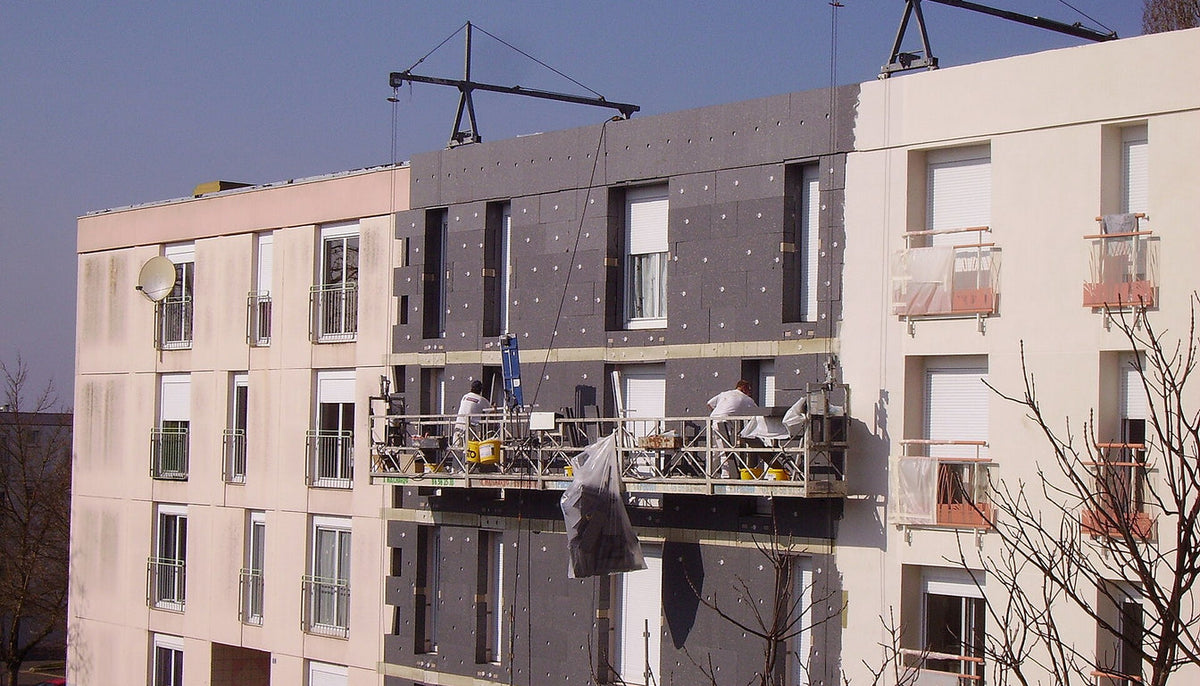
External wall insulation, known technically as ETICS (External Thermal Insulation Composite System) – and commonly called “cappotto termico” in Italy – is an insulation system applied to the outside of a building's walls, designed to reduce heat loss in winter and limit overheating in summer.
Why is it so important?
- Reduces wall heat loss by 40-70% (source: Enpal).
- Improves the building's energy class, often by 2-4 classes (e.g. from G to B/C, or from F to A).
- Increases property value by up to 30-40% (class A/B homes are more sought after on the market).
- Improves living comfort by eliminating thermal bridges, mould and condensation, and keeping a more stable indoor temperature.
- Meets EU regulations: the Green Homes Directive (EU 2024/1275) sets minimum energy-efficiency requirements for buildings, with decarbonisation targets for 2050.
2. Insulation Technologies and Types
There are three main technologies for insulating walls, each with its own advantages, drawbacks and costs.
2.1 External Insulation (ETICS)
The most common and effective option (90% of installations in Italy). It consists of insulating panels bonded to the outside of the walls, followed by a reinforced base coat, mesh and final render.
Advantages
- Best thermal and acoustic insulation (removes thermal bridges)
- Protects the structure from thermal cycling and moisture
- Does not reduce indoor living space
- Extends the building's lifespan
- Most significant energy-class improvement (up to 4 classes)
Drawbacks
- Higher upfront cost (though recoverable through incentives)
- Exterior works: scaffolding and condominium permits required
- Longer execution times (2-4 weeks for an apartment)
2.2 Internal Insulation
Insulating panels – usually wood fibre, cork or mineral wool – are applied to the inside face of the walls.
Advantages
- Lower cost than external insulation
- Ideal for historic buildings or those under architectural restrictions
- Improves indoor comfort (removes the “cold wall” sensation)
Drawbacks
- Reduces usable floor space (5-10 cm thickness)
- Less effective at removing thermal bridges (1-2 class improvement)
- Risk of condensation if not properly designed
2.3 Ventilated Facade
A double-skin system: an insulating layer (mineral wool, wood fibre) plus an external cladding (stone, brick, metal panels) with a ventilated air gap between them.
Advantages
- Excellent thermal and acoustic insulation
- Suited to high-end buildings (villas, luxury apartment blocks)
- Long lifespan (50+ years)
Drawbacks
- Very high cost (€120-200/m²)
- Significant thickness (15-25 cm)
- Installation complexity: requires specialised labour

3. Types of Insulation Material: A Detailed Comparison
The choice of material depends on the climate zone, specific needs (fire resistance, acoustic insulation, eco-sustainability) and available budget. Comparison table of the materials most used in 2026:
| Material | Type | λ (W/mK) | Recommended thickness (cm) | Material cost (€/m²) | Full cost (€/m²) | Lifespan | Fire reaction |
|---|---|---|---|---|---|---|---|
| EPS | Synthetic | 0.030-0.038 | 10-14 | 5-20 | 60-80 | 25-30 yrs | E |
| Graphite EPS | Synthetic | 0.030-0.032 | 8-12 | 10-25 | 70-90 | 25-30 yrs | E |
| XPS | Synthetic | 0.029-0.033 | 8-12 | 15-25 | 80-100 | 30+ yrs | E |
| Rock Wool | Mineral | 0.035-0.040 | 10-14 | 15-25 | 90-110 | 30+ yrs | A1 |
| Glass Wool | Mineral | 0.030-0.040 | 10-14 | 10-20 | 70-90 | 25-30 yrs | A1 |
| Wood Fibre | Natural | 0.038-0.050 | 10-14 | 20-40 | 120-140 | 50+ yrs | B2/D |
| Cork | Natural | 0.040-0.045 | 10-12 | 20-40 | 100-120 | 50+ yrs | B2 |
| Polyurethane (PIR/PUR) | Synthetic | 0.022-0.028 | 6-10 | 30-50 | 100-130 | 30+ yrs | B2/E |
| Aerogel | Innovative | 0.013-0.015 | 2-5 | 100-120 | 120-150 | 30+ yrs | A1/B1 |
Sources: Rassegna Edile, Architettura Italia, Christian Guerretta.
Which Material Should You Choose?
| Need | Recommended material | Why |
|---|---|---|
| Best value for money | Graphite EPS | Cost-effective and high-performing |
| Fire resistance (tall apartment blocks) | Rock Wool | Non-combustible (A1) |
| Acoustic insulation | Rock Wool / Glass Wool | Sound-absorbing |
| Green building and sustainability | Wood Fibre / Cork | Natural, breathable |
| Damp areas (basement, plinth) | XPS | Moisture-resistant |
| Minimal thickness (heritage constraints) | Aerogel / Polyurethane | High insulation in little thickness |
| Summer comfort (thermal lag) | Wood Fibre / Cork | High thermal mass |
4. How External Wall Insulation (ETICS) Is Installed
Installing external wall insulation follows a standardised nine-step process:
-
Survey and Design
Assessment of wall condition (damp, cracks, mould); choice of insulation material, thickness (10-20 cm) and finish; calculation of thermal transmittance (U-value) to meet regulatory requirements.
-
Wall Preparation
Removal of damaged render, cleaning and levelling; application of a primer to improve adhesion.
-
Adhesive Application
A specific adhesive (cement-based or polymer-based) is spread on the wall, using a perimeter-bead-plus-central-dabs technique for stability.
-
Fitting the Insulation Panels
Panels are bonded with staggered joints to avoid thermal bridges. Standard thickness: 10-14 cm (temperate zones), 14-20 cm (cold zones or nZEB standard).
-
Mechanical Fixing with Anchors
Plastic or metal anchors (5-8 per m²) secure the panels to the wall; mandatory for buildings above 20 metres or in seismic zones.
-
Reinforced Base Coat
A layer of reinforced base coat with an alkali-resistant fibreglass mesh is applied, 3-5 mm thick.
-
Finishing
A second coat of base render (2-3 mm) is applied, followed by the final finish: silicone, acrylic or mineral-based render, depending on the desired look.
-
Details and Trim
Thermal-bridge details (corners, window sills, thresholds) fitted with aluminium or PVC profiles; drip edges to prevent water infiltration.
-
Final Checks
Verification of water tightness and mechanical strength; issuing of a compliance certificate, mandatory to access incentives.
Installation Timeframes
| Surface area (m²) | Execution time | Notes |
|---|---|---|
| 50-100 m² (apartment) | 2-4 weeks | Including scaffolding and finishing |
| 200-300 m² (detached house) | 4-6 weeks | Depends on complexity |
| 500+ m² (apartment block) | 2-3 months | Work carried out in batches |
5. Costs of External Wall Insulation: What Will It Cost in 2026?
Costs vary depending on the insulation material, thickness, finish and site complexity (height, accessibility, scaffolding).
| Material | Thickness (cm) | Cost/m² (full job) | Cost per 100 m² of wall | Notes |
|---|---|---|---|---|
| EPS | 10 | €60-70 | €6,000-7,000 | Most economical option |
| EPS | 12 | €70-80 | €7,000-8,000 | Standard for temperate zones |
| Graphite EPS | 12 | €75-85 | €7,500-8,500 | +15-20% insulation vs white EPS |
| XPS | 10 | €80-90 | €8,000-9,000 | Moisture-resistant |
| Rock Wool | 10 | €90-100 | €9,000-10,000 | Non-combustible (A1) |
| Rock Wool | 12 | €95-110 | €9,500-11,000 | Ideal for tall apartment blocks |
| Wood Fibre | 12 | €120-140 | €12,000-14,000 | Green building, summer comfort |
| Cork | 12 | €100-120 | €10,000-12,000 | Natural, breathable |
| Polyurethane (PIR) | 8 | €100-130 | €10,000-13,000 | Maximum insulation, minimal thickness |
| Aerogel | 5 | €120-150 | €12,000-15,000 | Exceptional performance, minimal thickness |
Additional Costs
| Item | Cost (€) | Notes |
|---|---|---|
| Scaffolding | €8-15/m²/month | Depends on building height |
| Design and engineering | €500-1,500 | Mandatory for tax deductions |
| Removal of old render | €5-10/m² | If needed |
| Mechanical anchors | €2-5/m² | Mandatory for buildings over 20 m |
| Fibreglass mesh | €3-5/m² | Included in the reinforced base coat |
Worked Example: Cost for a 100 m² House (200 m² of Walls)
| Material | Thickness (cm) | Total cost (incl. tax) | Payback time (with incentives) |
|---|---|---|---|
| EPS 12 cm | 12 | €14,000-16,000 | 8-10 years |
| Rock Wool 12 cm | 12 | €18,000-22,000 | 10-12 years |
| Wood Fibre 12 cm | 12 | €24,000-28,000 | 12-15 years |
Sources: Rassegna Edile, Riva Ingegnere, QuantoCosta.info.

6. Performance: Savings and Energy Improvement
With vs Without Insulation (100 m², Climate Zone E – Northern Italy)
| Parameter | Without insulation (Class G) | With insulation (Class B/C) | Savings / Change |
|---|---|---|---|
| Annual heating consumption | 21,000 kWh | 9,000-12,000 kWh | 40-60% |
| Annual gas cost (€1.20/m³) | ~ €3,024 | ~ €1,296-1,584 | ~ €1,440-1,728 |
| Consumption kWh/m² per year | > 210 | 60-90 | From G to B/C (+4 classes) |
| CO₂ emissions (kg/year) | ~ 4,200 kg | ~ 1,800-2,400 kg | 40-60% reduction |
| Indoor winter temperature | 16-18°C (uneven) | 20-22°C (stable) | +4°C |
| Indoor summer temperature | 28-30°C (stuffy) | 24-26°C (cool) | -4°C |
| Mould/condensation risk | High | Low/None | Eliminated |
Sources: ApeFacile, Enpal, Brescia Domani.
Percentage Savings by Starting Energy Class
| Starting class | Energy savings with insulation | Class improvement | Payback time (with incentives) |
|---|---|---|---|
| G | 40-60% | +3-4 classes (→ B/C) | 8-10 years |
| F | 35-50% | +2-3 classes (→ C/D) | 10-12 years |
| E | 30-40% | +2 classes (→ C) | 12-15 years |
| D | 25-35% | +1-2 classes (→ B/C) | 15-20 years |
| C | 20-30% | +1 class (→ B) | 20+ years |
Annual Financial Savings (Worked Example)
Reference data: 100 m² floor area (200 m² of walls), climate zone E (Northern Italy), natural gas heating (€1.20/m³), consumption without insulation 21,000 kWh/year (~ €3,024/year).
| Material | Annual savings (€) | Payback time (years) | Payback time with incentives (50%) |
|---|---|---|---|
| EPS 12 cm | €1,440-1,728 | 9-10 years | 4-5 years |
| Rock Wool 12 cm | €1,500-1,800 | 10-12 years | 5-6 years |
| Wood Fibre 12 cm | €1,500-1,800 | 12-15 years | 6-8 years |
Comparison of Low-Rated Buildings (Classes E, F, G)
| Energy class | Annual consumption (kWh) | Annual gas cost (€) | Cost with insulation (€) | Savings (€/year) | Payback time (years) |
|---|---|---|---|---|---|
| G (uninsulated) | 21,000 | €3,024 | €1,300 | €1,724 | 8-10 |
| F (poorly insulated) | 18,000 | €2,592 | €1,100 | €1,492 | 10-12 |
| E (average insulation) | 15,000 | €2,160 | €900 | €1,260 | 12-15 |
| D (good insulation) | 12,000 | €1,728 | €800 | €928 | 15-20 |
Key Takeaways
- A class-G building can move up to class B/C with external insulation, saving up to €1,700/year.
- Payback time is roughly halved with tax incentives (Ecobonus 50-65%).
- External insulation is the single most effective measure for improving a building's energy class (source: PG Casa).
7. 2026 Tax Incentives: How to Save on External Insulation
In 2026 the Italian State offers several incentives for energy retrofitting:
| Incentive | Rate | Spending cap | Requirements | Deadline |
|---|---|---|---|---|
| Ecobonus | 50-65% | €100,000 | Works on the building envelope (insulation, roof, windows) | 31/12/2026 |
| Renovation Bonus | 50% | €96,000 | Renovation works, including insulation | 31/12/2026 |
| Conto Termico 3.0 | Up to 65% | Varies | Heat pumps, solar thermal, insulation (public bodies and private in some regions) | Funds exhausted |
| Superbonus (2025 residual) | 110% | €136,000 | Condominiums and public housing bodies only, expiring | 30/06/2026 |
How to Access the Incentives
- Work with a qualified professional (engineer, architect, surveyor) for the design and the Energy Performance Certificate (APE).
- Choose certified materials (with an EPD – Environmental Product Declaration).
- Submit documentation to ENEA (for the Ecobonus) or the Revenue Agency (for tax deductions).
- Pay via the dedicated “talking” bank transfer required for the deductions.
Example with a 65% Ecobonus
Cost of insulation (EPS 12 cm, 200 m²): €15,000 – 65% deduction: €9,750 (recovered over 10 years) – Net cost: €5,250 – Annual savings: €1,500 – Payback time: ~ 3.5 years.
8. Pros and Cons of External Wall Insulation
Advantages
- Energy savings 20-60% less heating/cooling consumption
- Energy class improvement Jump of 2-4 classes (e.g. from G to B)
- Living comfort Stable temperature, no mould/condensation
- Environmental impact CO₂ emissions cut by 40-60%
- Property value Up to 15-40% increase (class A/B homes are more sought after)
- Building lifespan Protects masonry from weathering
- Acoustic insulation Reduced outside noise, especially with rock wool
- Tax incentives Deductions of up to 65% (Ecobonus)
Drawbacks
- Upfront cost €60-150/m² depending on material
- Execution time 2-6 weeks depending on surface area
- Exterior works Scaffolding required (added cost)
- Space loss (indoor) 5-10 cm, only for internal insulation
- Fire risk (EPS/XPS) Combustible (class E) – rock wool is non-combustible (A1)
- Moisture sensitivity Mineral wool and natural materials need vapour barriers
9. Conclusions: Is External Wall Insulation Worth It?
Yes, if:
- The building has a low energy class (E, F, G).
- You live in a cold climate zone (E, F).
- You want to improve living comfort (removing mould, cold, or excessive heat).
- You can access tax incentives (Ecobonus 50-65%).
- You're looking to increase the property's market value.
No, if:
- The building is already class A or B (only marginal improvements possible).
- You have a very limited budget (upfront costs are high).
- It's a historic building under architectural restrictions (internal solutions may be preferable).
Final Tips
- Choose the material based on your needs: limited budget → Graphite EPS (€70-80/m²); fire safety → Rock Wool (€90-110/m²); green building → Wood Fibre or Cork (€100-140/m²).
- Choose a thickness of at least 12-14 cm to maximise savings.
- Pair the insulation work with other upgrades (window replacement, heat pump) to further improve the energy class.
- Make use of tax incentives (Ecobonus 65%) to roughly halve the cost.
- Rely on certified professionals for a technically sound installation.
FAQ
How much can you save with external wall insulation?
20-60% on heating/cooling consumption – up to €1,500-2,000/year for a 100 m² class-G home.
How much does external insulation cost for a 100 m² home?
€12,000-20,000, depending on the material and thickness used.
How long does it take to recover the cost?
8-10 years without incentives, 4-6 years with a 65% Ecobonus.
Which material is the best?
There's no single “best” material overall – it depends on budget, needs and climate zone. Best value for money: Graphite EPS. Best acoustic insulation: Rock Wool. Best summer comfort: Wood Fibre or Cork.
Is external wall insulation mandatory?
No, but it is strongly recommended in order to reduce energy consumption (in line with the EU's 2050 decarbonisation target), improve the energy class (relevant when selling or renting) and access tax incentives.
Photo credits
- Cover: photo by Cjp24, CC BY-SA 4.0, via Wikimedia Commons, cropped
- Image 1: photo by Threecharlie, CC BY-SA 4.0, via Wikimedia Commons
- Image 2: photo by Cjp24, CC BY-SA 4.0, via Wikimedia Commons


