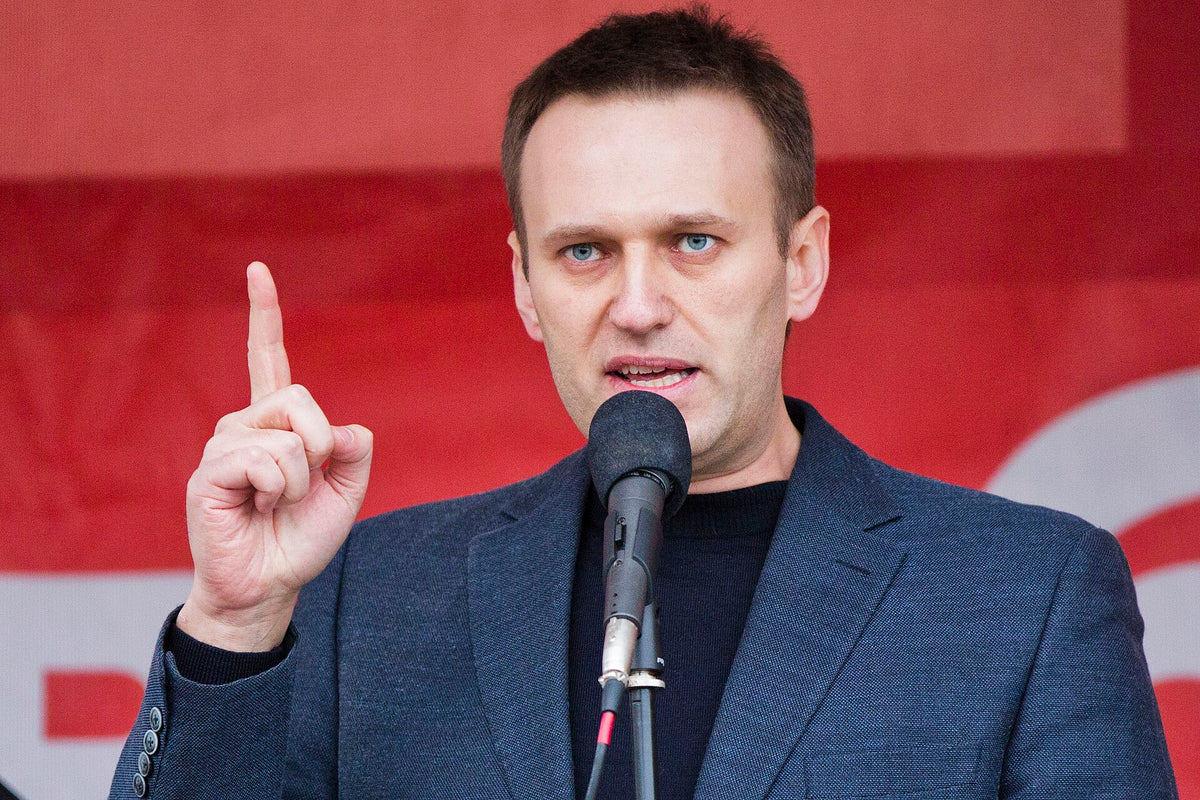
Alexei Anatolyevich Navalny (1976–2024) was one of the most courageous and controversial figures in modern Russia: a lawyer, blogger, anti-corruption activist and opposition leader who openly challenged Vladimir Putin's rule. His life — marked by legal battles, an assassination attempt and unwavering determination — inspired millions of people in Russia and abroad. His death, in circumstances that remain disputed, in February 2024 left a deep void, and an open question: who will carry forward his fight for a free and democratic Russia?
“I'm not afraid, and I urge you not to be afraid either. I know I'm right.” — Alexei Navalny
Origins: Childhood and Education
A modest family and an education
Alexei Navalny was born on 4 June 1976 in Butyn, a small village in the Moscow region, to a middle-class family: his father Anatoly was a Red Army officer, and his mother Lyudmila was an economist. The family soon moved to Obninsk, a science city southwest of Moscow, where Navalny spent much of his childhood. A gifted student, he enrolled in the Law Faculty of the Peoples' Friendship University of Russia, graduating in 1998.
The 1990s: reform and corruption
The 1990s in Russia were a turbulent decade: the collapse of the Soviet Union, the transition to capitalism, and the rise of a new oligarch class. After graduating, Navalny worked as a lawyer specializing in financial and corporate law for various Russian companies; two names, Yves Rocher and the state-owned timber company KirovLes, would later return in the criminal cases brought against him. These experiences gave him a close view of the mechanics of corruption in Russia.
The Rise of an Activist: From Blogger to Politician
The blog and early exposures (2006–2010)
In 2006 Navalny opened a blog on LiveJournal, then a hugely popular platform in Russia, soon focusing on corruption and abuses of power by the authorities. In December 2010 he launched RosPil, a project to monitor public procurement: within months his team identified billions of rubles lost to rigged contracts and kickbacks.
Founding the Anti-Corruption Foundation (FBK)
In 2011 Navalny founded the Anti-Corruption Foundation (FBK), an independent organization dedicated to investigating corruption among Russian officials, which quickly became one of the country's most influential — and most feared by the regime — voices:
-
2015
the film “Chaika” on the business dealings of Prosecutor General Yury Chaika and his sons;
-
2017
the documentary “He Is Not Dimon to You,” on the alleged corruption of then Prime Minister Dmitry Medvedev;
-
2021
the video “Putin's Palace” (over 120 million views), revealing a $1.3 billion palace built on the Black Sea coast.
The 2011–2012 protest movement
After the 2011 parliamentary elections, widely seen as rigged, Navalny became one of the leaders of the Bolotnaya protests, Russia's largest opposition movement since the 1990s. He was arrested repeatedly, but his popularity kept growing: in the 2013 Moscow mayoral election he won a surprising 27% of the vote despite a campaign obstructed by the authorities.

Persecution: Arrests, Trials and Convictions
In 2013 Navalny was sentenced to five years in prison for embezzlement in the so-called “KirovLes case,” widely regarded as politically motivated; the sentence was suspended, but he was placed under house arrest. Despite the restrictions he kept working: in 2014 he received a suspended sentence of three and a half years in the Yves Rocher case, and in 2018 he was barred from the presidential race over a prior criminal record, running an active election-boycott campaign instead.
The 2020 poisoning
On 20 August 2020 Navalny was poisoned with a Novichok-type nerve agent — the same substance used in the 2018 attack on Sergei Skripal — during a flight from Tomsk to Moscow. Rushed into emergency care, he was placed in a medically induced coma and later transferred to Germany for treatment. International investigations, including by Bellingcat, CNN and Der Spiegel, attributed the operation to Russia's FSB security service; the Kremlin denied any involvement. Navalny spent about a month in a Berlin hospital and stayed in Germany to recover until January 2021, continuing to speak out against the regime via social media.
Return to Russia and arrest (2021)
On 17 January 2021 Navalny returned to Russia despite the risks, and was arrested at Moscow airport for an alleged parole violation tied to the Yves Rocher case. His arrest triggered mass protests across the country. In prison he received a series of further sentences that extended his detention indefinitely:
-
February 2021
2 years and 8 months in a penal colony;
-
March 2022
an additional 9 years for fraud and contempt of court;
-
August 2023
a further 19 years, in a closed-door trial, on extremism charges.
Death in Prison (2024)
On 16 February 2024 Navalny died at the IK-3 maximum-security prison in Kharp, in the Arctic Yamalo-Nenets region. Russian authorities said he had felt unwell after a walk and could not be resuscitated.
Disputed circumstances
His family was not informed immediately and could not see the body for days. The death certificate was reportedly amended more than once, with conflicting causes of death given. Testimony from fellow inmates raised questions about possible mistreatment in the hours beforehand. Amnesty International called for an independent investigation, which Russian authorities never granted. His death set off protests around the world and a funeral procession in Moscow attended by tens of thousands of people, despite threats from the authorities.

Navalny's Legacy: A Symbol of Resistance
1. The fight against corruption
Navalny changed how many Russians perceive corruption: he made public documents on the hidden wealth of Putin and his allies, set a new standard of transparency through thousands of FBK investigations into corrupt officials, and inspired a new generation of journalists and activists.
2. The courage to challenge the regime
He refused exile, returning to Russia knowing he risked prison or death; he kept speaking out even from behind bars, through letters and messages that continued to circulate online; and he helped bridge a historically fractured opposition spanning liberals, nationalists and socialists.
3. The use of social media and technology
His YouTube videos reached millions of views, bypassing state censorship; Telegram and Twitter became key tools for mobilizing supporters; and the FBK accepted cryptocurrency donations to get around frozen bank accounts.
Who Is Carrying the Legacy Forward
Yulia Navalnaya
Navalny's widow has emerged as one of the opposition's strongest voices: she has publicly denounced the regime, taken over the leadership of the Anti-Corruption Foundation (FBK), and met with world leaders to press for sanctions against Russia.
The Anti-Corruption Foundation (FBK)
Despite being banned in Russia in 2021, the FBK continues to operate from abroad under longtime collaborators such as Maria Pevchikh, Vladimir Ashurkov and Georgy Alburov, maintaining a digital archive of its investigations and providing legal support to political prisoners.
New opposition leaders
- Ilya Yashin — sentenced to 8½ years, freed in the prisoner exchange of 1 August 2024;
- Vladimir Kara-Murza — sentenced to 25 years, recognized by Amnesty International as a prisoner of conscience, freed in the same exchange;
- Mikhail Khodorkovsky — a former oligarch now living in exile, funding opposition projects;
- Dmitry Gudkov — former leader of the Party of Changes.
International organizations and a new generation
Amnesty International and Human Rights Watch continue to monitor the crackdown in Russia; Bellingcat has pledged to keep investigating politically motivated killings, including Navalny's death; the European Union and the United States have imposed sanctions on those responsible. Inside Russia, students, independent outlets (Meduza, TV Rain/Dozhd, the shuttered Novaya Gazeta) and digital activists continue, through different means, the work of exposing wrongdoing.
Global Impact
The United States and the European Union have sanctioned officials involved in Navalny's persecution; the European Parliament has called for an international investigation into his death. His methods of digital investigation have inspired opposition movements in Belarus and anti-corruption activists elsewhere, while debate continues over what a post-Putin Russia might look like — and over how effective a largely exiled opposition can be in bringing that change about.
Conclusion
Alexei Navalny was more than a political opponent: to his supporters, he became a symbol of civic resistance, demonstrating how public exposure and transparency can unsettle even deeply entrenched systems of power. His story remains at the center of an active international debate over human rights, the space for opposition in Russia, and the country's political future.
“Navalny's death is not the end, but the beginning of something even bigger.” — Yulia Navalnaya, February 2024
Sources and Further Reading
- Anti-Corruption Foundation (FBK) — published investigations (site blocked in Russia)
- Bellingcat — investigations into the poisoning and death of Navalny
- Amnesty International — human rights reporting on Russia
- Meduza — independent journalism on Russia
- “This Is Not Propaganda,” Peter Pomerantsev
- “Putin's People,” Catherine Belton
- “The Man Without a Face,” Masha Gessen
Photo credits
- Cover: photo by Evgeny Feldman / Novaya Gazeta, CC BY-SA 3.0, via Wikimedia Commons
- Image 1: photo by Evgeny Feldman, CC BY-SA 4.0, via Wikimedia Commons
- Image 2: photo by Акутагава, CC BY 4.0, via Wikimedia Commons


